Small Steps Big Changes Daily Dog Routine for Security and Enrichment

Updated: Aug 11
Direct Answer
A good daily dog routine includes interactive feeding, scent work, and a thoughtful mix of physical play and rest. The goal is not to fill every hour. The goal is to create a steady rhythm your dog can trust.
When a dog knows what usually happens next, the world feels less random. A predictable daily pattern can support calmer dog behavior, canine enrichment, and a deeper sense of safety at home.
Pillar: Enrichment & Environment

Why Small Changes in Your Dog Routine Creates Security
Dogs are pattern readers.
They notice the sound of the coffee grinder, the shoes by the door, the hand reaching for the leash, the shift in human energy before a meeting begins. Much of their emotional life is built from these patterns. When the day has a shape, the dog does not have to keep guessing.
A routine tells the nervous system, “You can settle now. Your needs have a place in this day.”
That matters because many behavior struggles grow in the empty spaces. A dog who has no clear outlet may invent one. Chewing, barking, pacing, counter surfing, or digging can become self-made jobs. Those behaviors are not moral failures. They are often signals of unmet needs, unclear expectations, or too much unstructured time.
A daily routine gives the dog work that makes sense.
Not a full schedule. Not constant entertainment., but small changes in the dogs daily routine give just enough predictable engagement to help the body move, the nose search, the mouth chew, and the brain solve small problems.
For many dogs, that rhythm can reduce destructive behavior because the dog is no longer spending the whole day looking for something to do. The “job” has already been offered.
The Mindset Shift That Makes the Routine Work
A routine works best when it feels livable.
Many people wait for a perfect version of dog care. The long hiking trail. The full training session. The fresh homemade enrichment project. The quiet afternoon with no interruptions.
Those days are lovely when they happen, but they are not the foundation.
The foundation is smaller.
A few minutes of sniffing before the workday. Breakfast in a slow feeder. A short tug game after lunch. A lick mat while dinner is being prepared. A calm walk at dusk where the dog gets to choose the scent trail for a while.
Small habits build trust because they repeat.
The same truth holds in human life. A 10-minute walk can change the tone of a morning. A 5-minute call can protect a friendship. A few quiet breaths before sleep can soften the mind. Most lasting change is not dramatic. It is practiced.
Dogs live close to this wisdom. They do not need a perfect day. They need a day that remembers them.
A few minutes of meaningful engagement every day is more powerful than one long enrichment session once a week.
Build the Day Around Three Natural Needs
A strong routine supports the dog as a whole being. That means it should include food, movement, scent, choice, social connection, and rest.
The easiest way to begin is with three daily anchors.
Interactive feeding gives the brain a job
Putting food in a bowl is not wrong. Some dogs need simple meals for comfort, health, or safety. But when appropriate, interactive feeding turns a basic need into a quiet thinking task.
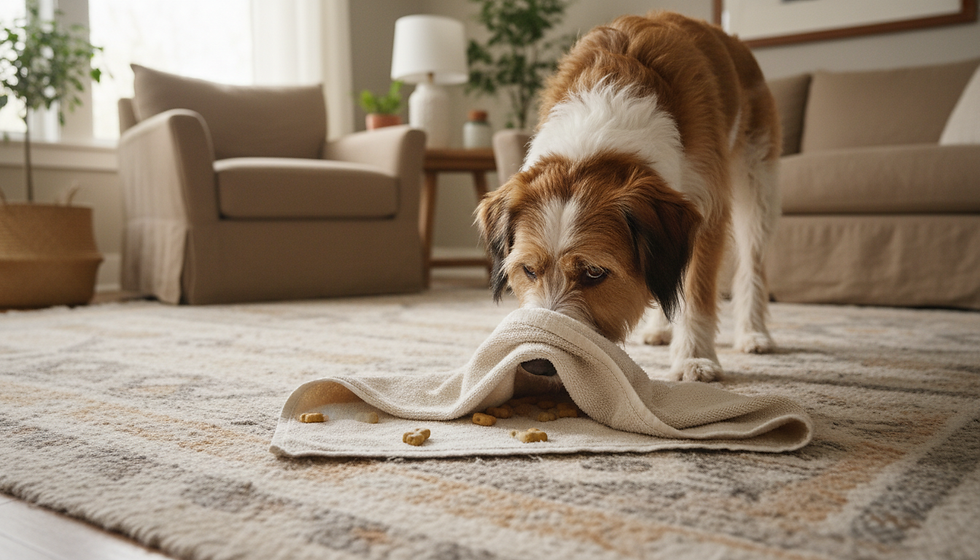
Food puzzles, snuffle mats, slow feeder inserts, treat towels, and scatter feeding can all help a dog use problem-solving skills during mealtime. This creates mental stimulation for dogs without requiring long training blocks or high physical effort.
The task should match the dog.
A beginner puzzle should be easy enough to create success. A frustrated dog is not being enriched. A dog who gives up, paws too hard, whines, or walks away may need a simpler setup.
Start with food partly visible. Let the dog win often. Confidence is part of the enrichment.
Scent work lets the dog read the world
Sniffing is not wasted time. It is information gathering.
A dog’s nose gives access to layers of detail people barely notice. Scent can tell a dog who passed by, what animals moved through the area, where food might have been, and how the environment has changed.
Adding scent work does not require formal training. It can begin with a few simple habits:
Scatter part of breakfast in clean grass or on a sniff-safe mat.
Hide a few treats around one room and say “find it.”
Let the dog pause on walks instead of moving at a human pace the whole time.
Rotate safe household objects into a sniffing game, such as cardboard tubes or folded towels.
For dogs who feel worried outside, indoor scent games can be especially kind. The nose can work while the body stays in a place that feels safe.
Physical play moves energy through the body
Movement supports dog wellness, but the kind of movement matters.
Some dogs need running. Others need gentle walking, tug, flirt pole play, swimming, or short games of fetch with breaks. The best play leaves the dog satisfied, not frantic.
Watch the recovery.
A dog who can pause, take a breath, reengage, and settle afterward is likely playing within a healthy range. A dog who cannot stop, becomes mouthy, spins higher and higher, or struggles to rest may need shorter sessions and calmer closing rituals.
A good rule is to end active play with something that brings the body down:
A slow sniff in the yard
A short scatter feed
A chew
A settle cue practiced with positive reinforcement dog training
Quiet contact, if the dog enjoys touch
The body needs a path back to calm.

A Simple Daily Routine That Actually Fits Real Life
The best routine is the one that can survive tired mornings, busy afternoons, weather changes, and human life.
Think in anchors instead of strict times. Dogs like predictability, but most can learn a rhythm that has some flexibility. “After breakfast, we do a short food puzzle” is easier to maintain than “At exactly 7:10 a.m., enrichment begins.”
Here is a practical daily rhythm.
Time of day | Purpose | Example |
Morning | Begin with clarity | Potty break, short sniff walk, breakfast in a slow feeder |
Midday | Break up waiting time | Find-it game, chew, or hide-and-seek toy |
Afternoon | Offer a clear job | Puzzle toy, training game, or scent search |
Evening | Move and reconnect | Walk, tug, gentle fetch, or decompression sniffing |
Night | Settle the body | Lick mat, calm chew, soft rest routine |
This is not a script. It is a scaffold.
A senior dog may need shorter walks and more sniffing. A young adolescent may need several brief outlets spread across the day. A worried dog may need fewer surprises and more calm repetition. A high-drive dog may need carefully chosen work that builds focus rather than constant arousal.
The daily question is simple:
What does this dog need today to feel safe, engaged, and able to rest?
Weekly Rotation Keeps Enrichment Fresh
Dogs can get bored with the same task repeated the same way. That does not mean every day needs a new project. It means the routine can stay predictable while the details change.
A weekly rotation kit works well because it removes decision fatigue.
Choose a few enrichment toys or tools and assign them to different days. Keep the structure familiar, but rotate the object, texture, or challenge.
For example:
Monday
Snuffle mat breakfast
Tuesday
Slow feeder insert with softened food
Wednesday
Cardboard box search with treats hidden inside paper
Thursday
Food puzzle with easy sliding pieces
Friday
Towel roll with kibble tucked in loose folds
Saturday
Backyard scatter feed
Sunday
Hide-and-seek toy during chores
The rotation does two things. It keeps the dog interested, and it helps the human follow through. When the plan is already made, the habit becomes lighter.
Weekly rotation also supports dog education in a gentle way. The dog learns that problems can be solved, new textures can be explored, and human guidance is safe.
Tools That Make the Routine Easier
Tools should serve the relationship. They should not replace it.
The right enrichment setup helps a dog engage while the human is cooking, answering messages, helping children, or simply needing a quiet moment. Used well, tools can turn ordinary parts of the day into steady points of connection.
Weekly rotation kits
A rotation kit can be as simple as a labeled bin with five or six safe activities. It might include a puzzle toy, a snuffle mat, a lick mat, a treat ball, a towel for rolling food, and a few cardboard items.
The value is not in buying more things. The value is in reducing friction.
When the activity is ready, the routine is more likely to happen.
Slow feeder inserts
Slow feeder inserts fit inside many bowls and encourage the dog to work around ridges or patterns to reach food. For dogs who eat quickly, these tools can make mealtime slower and more thoughtful.
They also give the brain a mild job at a moment that already exists every day.
Keep the difficulty appropriate. The dog should finish the meal without stress or exhaustion.
Hide-and-seek toys
Hide-and-seek toys let a dog pull smaller pieces from a larger toy, search for food, or investigate hidden compartments. These can be useful during work calls, household chores, or quiet afternoons.
Choose toys based on the dog’s chewing style. A soft toy may work for a gentle investigator. A stronger chewer may need sturdier options and closer supervision.
No toy is truly universal. Safety comes from knowing the dog in front of you.

Read the Dog, Not the Clock
A routine should create security, not pressure.
Some days a dog needs less activity. Heat, stress, poor sleep, visitors, a loud storm, or a big outing the day before can change capacity. A wise routine has room for adjustment.
Look for signs the routine is helping:
The dog settles more easily after activities.
The dog engages with less frustration.
Walks include more relaxed sniffing.
Waiting periods become quieter.
The dog checks in more often during games.
Recovery after excitement becomes smoother.
Also watch for signs the plan needs to change:
The dog seems more frantic after play.
Puzzle toys cause whining or pawing without progress.
The dog guards enrichment items.
Chewing becomes intense or unsafe.
The dog cannot rest after repeated activities.
More is not always better. Enrichment should meet a need, not create a constant expectation of stimulation.
Calm is part of the routine too.
The Human Connection in Daily Habits
Dogs teach a quiet lesson about consistency.
A life does not become steadier through rare acts of intensity. It becomes steadier through repeated care. The water bowl filled. The leash lifted. The hand opening the back door. The familiar words before breakfast. The soft closing pattern at night.
These moments may look small, but they say something powerful.
“You are remembered.”
That message changes a home.
For people, the same structure can be healing. A dog’s routine often becomes a human routine too. The morning walk gets the body outside. The sniff pause slows the mind. The evening game marks the end of work. The night chew invites the room to quiet down.
Care flows both ways.
The dog receives predictability. The human receives rhythm. Together, they build a shared language made of small, repeated promises.

When the Routine Needs Adjustment
A routine should be steady, but not rigid.
If a dog begins to struggle, step back and simplify. Return to easier puzzles. Shorten play. Add more sniffing and chewing. Reduce novelty for a few days. Keep transitions gentle.
For dogs with major fear, reactivity, separation distress, sudden behavior changes, or safety concerns, support from a qualified professional can help. Choose force-free guidance that respects the dog’s emotional state and avoids fear or punishment.
It can also help to understand which behaviors are normal canine needs and which may signal stress or unmet support. For more context, read this guide to natural dog behaviors and what may need more attention.
The next step does not have to be large.
Choose one anchor. Breakfast in a puzzle. A 10-minute sniff walk. A find-it game after lunch. Repeat it for a week. Let the dog learn the pattern. Let the household feel the difference.
Small steps become big changes because they are easy to return to.
They become the rhythm under the day.
They become security.
They become love in a form the dog can predict.


Comments