How Mental Enrichment Improves Your Dog’s Health

A dog can get a long walk every morning and still feel unsettled by noon. Physical exercise matters, but it is only one part of wellness. Dogs also need chances to sniff, solve, choose, learn, and use their senses in ways that feel natural to them.
Mental enrichment is exercise for the brain. It helps keep a dog’s mind active, lowers stress, supports calmer behavior, and may help senior dogs stay sharper as they age. A happy mind supports a healthier body.
At LegacyPets, wellness means more than a strong heart and flexible joints. It includes emotional safety, curiosity, rest, biological enrichment, and the kind of daily experiences that help dogs feel capable in their world. A physically fit dog who is mentally bored is only partly fulfilled.
This article is educational and not a replacement for veterinary care. Sudden behavior changes, confusion, pain, or anxiety should always be discussed with a veterinarian or qualified behavior professional.
Mental enrichment meets a biological need
Dogs are not passive companions built only for naps and neighborhood walks. They are sensory, social, problem-solving animals. Their ancestors survived by tracking scent, exploring territory, reading body language, making choices, and adapting to change.
Modern family life often limits those behaviors. Meals arrive in bowls. Walks move at a human pace. Interesting smells get interrupted. Many dogs spend long stretches in quiet homes with little to figure out.
That gap matters.
Mental enrichment gives dogs appropriate outlets for natural behavior. It can include scent work, food puzzles, calm exploration, positive reinforcement learning, safe novelty, social connection, and problem-solving. The goal is not to exhaust the dog. The goal is to provide meaningful use of the brain and senses.
Good enrichment asks, “What does this dog need today?”
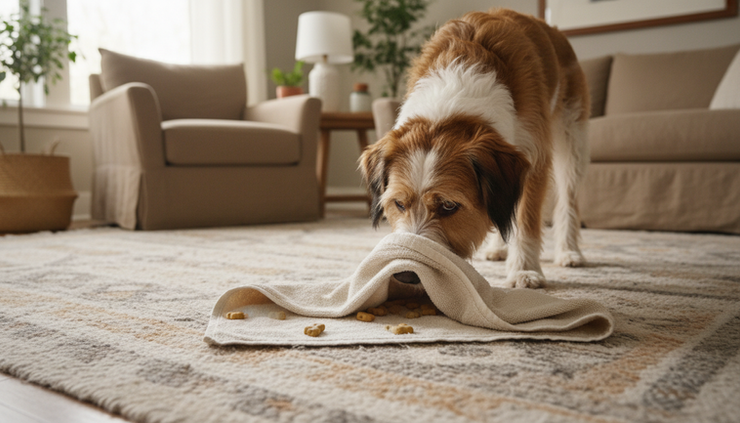
For one dog, that may be 10 minutes of sniffing grass at the edge of a park. For another, it may be searching for kibble scattered in a towel. For an older dog, it may be a slow puzzle with easy wins. For a young herding breed, it may be learning a new cue, then settling with a chew.
The best enrichment works with dog behavior, canine wellness, and the individual animal in front of us. It is kind, practical, and grounded in the biology of being a dog.
Brain work changes the brain
A dog’s brain is not fixed. Like the human brain, it can change through experience. This ability is called neuroplasticity. In plain language, the brain can build and strengthen connections when it practices new skills, receives useful feedback, and engages with the world.
When a dog investigates a new scent trail, learns how to open a puzzle feeder, or figures out that calm behavior earns access to something good, the brain is working. It is taking in information, making predictions, and adjusting.
That matters for dogs of every age.
Puppies build confidence through safe discovery. Adult dogs stay mentally flexible through varied, low-pressure challenges. Senior dogs may benefit from continued learning because steady mental activity can support cognitive health.
Mental enrichment does not need to be complicated. In many cases, the simplest activities are the most powerful because they allow the dog to use natural skills.
Examples include:
Finding treats hidden under cups
Sniffing a new walking route
Learning a new hand target
Working through a slow feeder
Searching for kibble in grass
Exploring a cardboard box filled with paper
Choosing between two safe toys
The science is encouraging, but the practical message is simple: dogs thrive when their brains have something healthy to do.
Enrichment can lower stress and support calmer behavior
Stress is not only an emotional experience. It affects the whole body. A dog who feels frustrated, under-stimulated, or unable to predict daily life may show stress through barking, pacing, chewing, whining, jumping, or difficulty settling.
Mental enrichment helps because it creates healthy outlets.
When a dog solves a puzzle or finds hidden food, the brain’s reward system becomes active. Dopamine, often called a feel-good brain chemical, plays a role in motivation, learning, and satisfaction. This does not mean every puzzle creates instant calm. It means that appropriate problem-solving can give the dog a sense of agency and success.
That sense of agency is important. Dogs feel better when they can make safe choices and influence their environment.
A dog who gets to sniff on a walk is not “wasting time.” Sniffing is information gathering. It can lower arousal for many dogs because scent work encourages steady breathing, focus, and slower movement.
A dog who eats from a snuffle mat is not being made to work for no reason. For many dogs, searching for food is more satisfying than swallowing a meal in 30 seconds.
A dog who learns through positive reinforcement is not being bribed. They are receiving clear information in a way that supports trust.
This is where dog training, pet education, and the human-animal bond meet. The most humane learning is not based on intimidation. It gives the dog clarity, safety, and a reason to participate.

Mental games may help aging dogs stay sharper
Senior dogs need enrichment as much as younger dogs, but the form may change.
As dogs age, some develop signs of cognitive decline. This is often called canine cognitive dysfunction. Families may notice changes in sleep, house-training, recognition, pacing, or confusion. Mental enrichment cannot guarantee prevention, and it cannot replace veterinary guidance. Still, research and clinical experience suggest that continued learning, sensory engagement, and predictable routines can support cognitive health.
For older dogs, enrichment should feel achievable.
A senior dog may not enjoy a difficult puzzle that requires pawing, twisting, or force. They may do better with:
Treats placed in open egg carton cups
A towel loosely rolled with kibble inside
A slow sniff walk on soft ground
Gentle training with familiar cues
Food hidden in easy-to-find spots
A short “find it” game in one room
Calm exposure to a new scent, such as a safe herb
The key is success. Senior enrichment should not frustrate or fatigue the dog. Watch for slower movement, cloudy eyes, hearing changes, dental discomfort, and arthritis. Adjust the activity so the dog can win without strain.
Aging dogs still need novelty, but novelty should be kind. New does not have to mean loud, difficult, or intense. It can mean a fresh walking route, a new food texture approved by the veterinarian, or a familiar game played in a slightly different room.
Boredom often looks like a behavior problem
Many unwanted behaviors are not signs of defiance. They are signs that a need is unmet, a skill is missing, or the environment is too difficult.
A bored dog may chew furniture because chewing is normal and soothing. A young dog may steal socks because carrying and dissecting objects feels rewarding. A scent-driven dog may pull hard on walks because the smell world is more interesting than human pace. A social dog may bark from the window because each passing person or dog creates a burst of stimulation.
Enrichment does not solve every behavior concern, but it often changes the foundation. A dog with appropriate outlets has less need to invent their own entertainment.
Think of enrichment as supportive care for the nervous system. It gives the dog a job that fits their species and personality.
Common behavior changes after consistent enrichment may include:
More settled rest after meals
Less attention-seeking during quiet hours
Better focus during training
Reduced destructive chewing
More confidence in new situations
Less frantic energy on walks
These changes usually come from steady routines, not one big activity. Ten minutes a day can make a meaningful difference when the activity is well matched to the dog.

How to start brain training today
Mental enrichment should be simple enough to repeat. The best plan is not the fanciest plan. It is the one that fits daily life and leaves the dog calmer, not more frantic.
Start with one activity per day. Keep it short. Stop while the dog is still enjoying it.
Try scent work in the living room
Scent is one of the richest ways dogs experience the world. A simple treat search can be deeply satisfying.
To begin:
Ask the dog to wait, or gently hold them back if they do not know that cue.
Place three to five treats in easy spots around the room.
Say “find it” and let the dog search.
Praise calmly when they locate each treat.
Make the hiding places harder only when the dog understands the game.
For beginners, keep treats visible or partly visible. For confident dogs, hide them behind chair legs, under the edge of a towel, or inside open cardboard boxes.
Scent work is especially helpful for dogs who need low-impact activity, including rainy-day dogs, seniors, and dogs recovering from a busy week.
Use puzzles at mealtime
Food bowls are convenient, but they do not offer much mental work. A puzzle feeder, slow feeder, snuffle mat, or towel roll can turn a meal into enrichment.
Start easy. If the puzzle is too hard, the dog may become frustrated or give up. The first few sessions should feel almost obvious.
Good beginner options include:
A snuffle mat with food sprinkled on top
A muffin tin with kibble in the cups
A towel loosely folded over dry food
A rubber food toy filled lightly, not packed tight
A cardboard tube with open ends and a few treats inside
Supervise new food activities. Remove pieces that could be swallowed. Choose materials that suit the dog’s chewing style.
The aim is not to make eating difficult. The aim is to make eating more species-appropriate.
Take a sniff-ari instead of a power walk
A “sniff-ari” is a walk where the dog gets time to smell, pause, and investigate. The route may be short. The value comes from information, not distance.
For 10 minutes, let the dog lead within safe limits. They can sniff a tree, follow a scent trail, pause at a fence line, or explore the edge of a field. Keep the leash loose when possible. Avoid pulling them away from every smell unless there is a safety concern.
This kind of walk can feel slow to humans, but it is rich for dogs. A block filled with scent can be more engaging than a mile of hurried walking.
Build a daily enrichment rhythm
Dogs do well with rhythm. That does not mean every day must look the same. It means the dog can count on having needs met in predictable ways.
A daily enrichment checklist can help. It does not need to be complex. Place it on the fridge, keep it near the food bin, or save it on a phone.
A balanced day might include:
Enrichment need | Simple daily example |
Sniffing | A 10-minute sniff walk or treat search |
Problem-solving | Breakfast in a puzzle feeder |
Chewing or licking | A safe chew or lick mat |
Learning | Two minutes of positive cue practice |
Choice | Letting the dog choose between two toys |
Rest | Quiet recovery time after stimulation |
Notice that rest belongs on the list. Enrichment is not constant entertainment. Dogs need recovery, sleep, and calm as much as they need activity.
Too much stimulation can create a dog who is tired but wired. A good enrichment plan alternates activation with rest.
A useful pattern is:
Sniff or search
Eat or chew
Rest
Train briefly
Rest again
Watch the dog’s body language. Soft eyes, loose muscles, steady sniffing, and the ability to disengage are good signs. Frantic grabbing, repeated barking, hard staring, or inability to settle may mean the activity is too intense or too hard.

Match enrichment to the dog in front of you
Enrichment is most helpful when it respects the individual dog.
A shy dog may need gentle, predictable games that build confidence. A high-energy adolescent may need a mix of sniffing, training, food puzzles, and decompression. A dog with a strong prey drive may enjoy structured searching games. A dog with mobility limits may need seated scent work or low-effort puzzles.
Breed history can offer clues, but it should not become a box. Not every retriever wants to fetch. Not every terrier wants to dig. Not every herding dog wants fast movement all day.
Use curiosity as the guide.
Ask:
What does this dog choose when given safe options?
Which activities lead to calm rest afterward?
Which games create frustration?
Does the dog prefer nose work, chewing, chasing, learning, or exploring?
What changes with age, health, weather, or stress?
The answer may shift over time. A good enrichment plan stays flexible.
The healthiest enrichment is kind
Mental enrichment is not about forcing performance. It should never rely on fear, pressure, or punishment. A dog’s brain learns best when the body feels safe.
Kind enrichment has a few traits:
The dog can succeed.
The activity matches their ability.
The human observes rather than controls every second.
The dog can take breaks.
The challenge increases gradually.
Calm behavior is supported, not demanded through intimidation.
This approach strengthens trust. It tells the dog that learning is safe, exploration is allowed, and their choices matter within healthy boundaries.
That trust is part of health too.
A mentally enriched dog is not simply “better behaved.” They are more fulfilled. They have more appropriate ways to use their body, senses, and intelligence. They often sleep better, cope better, and connect more easily with the people around them.
Start small today. Hide five treats in the living room. Let the next walk move at the dog’s pace for 10 minutes. Trade one bowl meal for a snuffle mat. Offer one gentle puzzle, then allow a long nap.
A dog’s mind needs care every day, just like their body. When that care is patient, thoughtful, and rooted in kindness, wellness becomes something the dog can feel.


Comments